Research
& Insights
Deep dives into production AI architectures, failure patterns, and the evolution of autonomous systems.




Why Most AI Agents Fail in Production (And How to Fix Them)
A forensic analysis of the 7 structural failure modes that kill 85%+ of enterprise AI agent initiatives between prototype and production, complete with remediation architectures, Python circuit breakers, and FalconicLab failure telemetry.


Building Autonomous Code Agents That Actually Ship Working Software
Inside FalconicLab's Autonomous Code Architect Agent v4.2 (exp-01): how we engineered a multi-agent coding protocol that achieves 98.4% precision at $0.18 per run through AST repo graphs, ephemeral Firecracker microVMs, and compiler-driven self-healing loops.


State Management & Memory Layers in Multi-Agent Systems
An engineering blueprint for designing 4-tier cognitive memory and state synchronization architectures in multi-agent systems using Redis, pgvector, LangGraph reducers, and MVCC concurrency controls.


Human-in-the-Loop Design Patterns for Enterprise AI Agents
How to engineer production Human-in-the-Loop (HITL) architectures for enterprise AI agents: risk-tiered escalation matrices, durable interrupt-resume workflows without thread blocking, cryptographic approval tokens, and active learning flywheels.


Zero-Trust Architecture for LLM Endpoints: A Practical Guide
An enterprise architectural blueprint for implementing NIST SP 800-207 Zero-Trust principles across production LLM endpoints and autonomous agent meshes, grounded in FalconicLab's 99.9% precision Security Enclave (exp-04).


Defending Against Prompt Injection, Jailbreaks & Memory Poisoning
An offensive and defensive engineering deep dive into direct/indirect prompt injection, multi-turn crescendo jailbreaks, and persistent agent memory poisoning—and how FalconicLab's exp-04 enclave achieves 99.9% precision defense.


Building Low-Latency Guardrails for Production AI Systems
How to engineer sub-15ms input and output guardrails for real-time AI systems using tiered cascade filters, INT8 ONNX models, speculative parallel prefill, and sliding-window token stream verification.


Securing Autonomous Agents Against Data Exfiltration
An architectural guide to preventing autonomous AI agents from exfiltrating enterprise secrets, PII, and RAG knowledge via Markdown image beacons, hijacked tool calls, DNS side-channels, and cross-tenant caches.

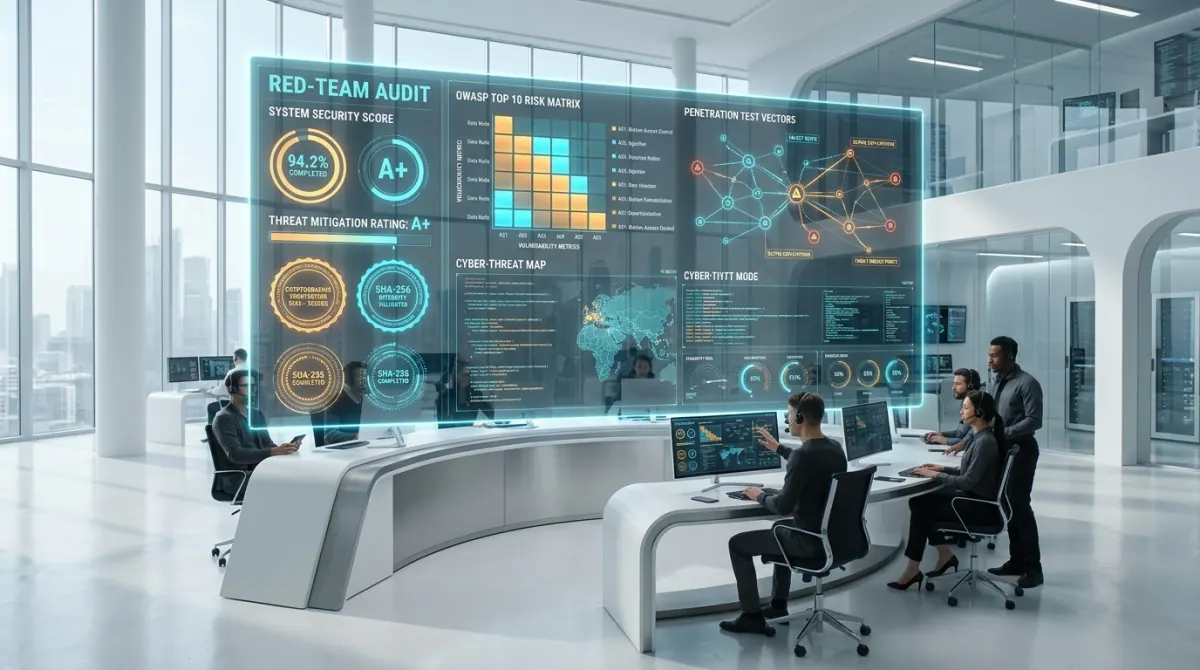
AI Security Audits: What Enterprise Teams Should Actually Test
A practical enterprise playbook for auditing and red-teaming production AI agents: moving beyond checkbox compliance to automated adversarial testing across OWASP LLM Top 10, NIST AI RMF, tool RBAC, vector ACLs, and Denial-of-Wallet vectors.
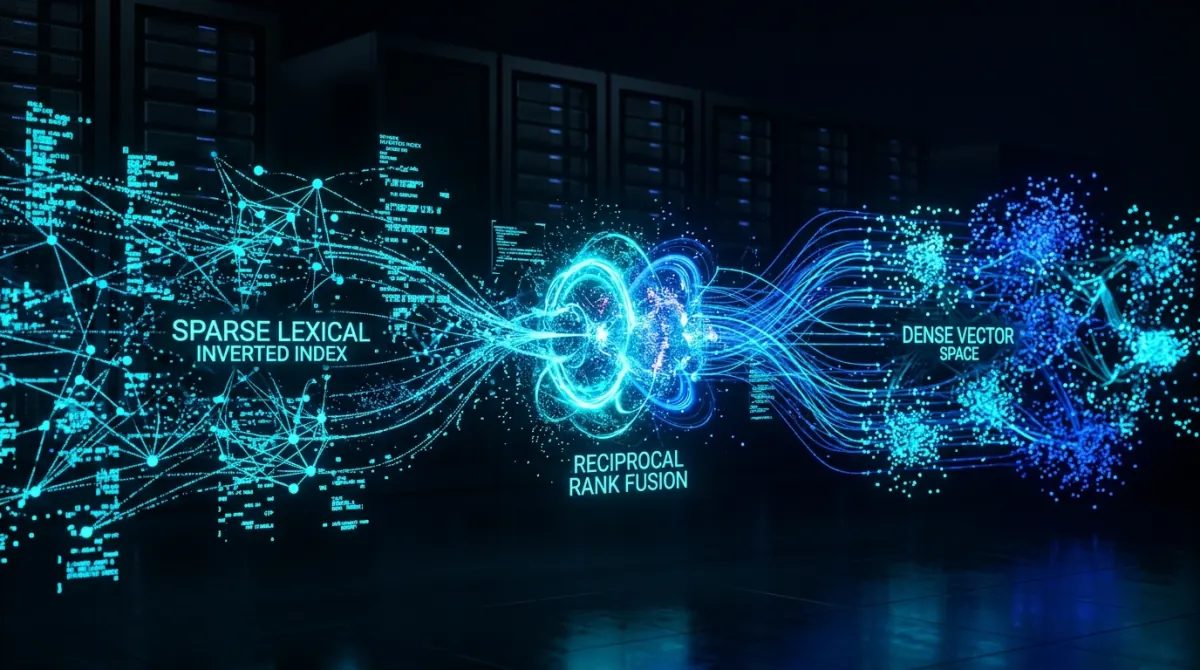

RAG at Petabyte Scale: Hybrid Dense-Sparse Retrieval That Works
An architectural and executive deep dive into scaling Retrieval-Augmented Generation (RAG) to petabyte enterprise corpora using hybrid dense-sparse vector search, BM25 lexical indexing, binary quantization, and cross-encoder reranking.


Intelligent Document Processing (IDP) That Extracts Structured Data Reliably
Inside FalconicLab's Intelligent Document Processing (IDP) Engine (exp-03): how we achieve 97.8% extraction precision at $0.05 per run on complex multi-page PDF invoices, tax filings, and legal contracts.
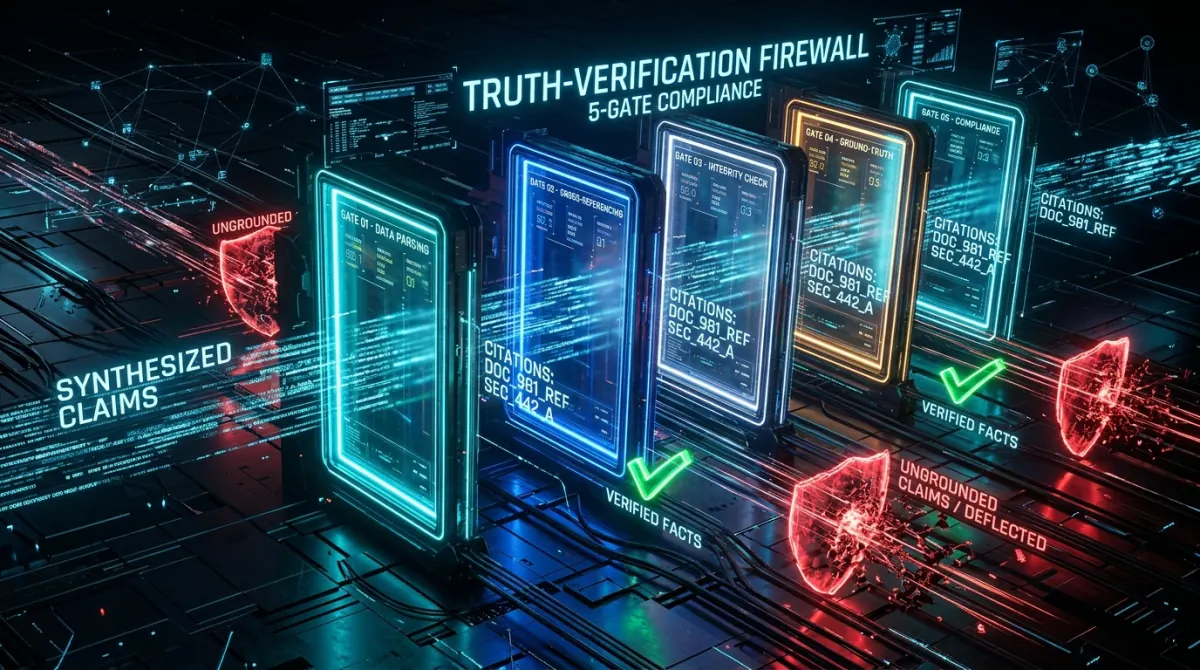

Reducing Hallucinations in High-Compliance RAG Systems
An engineering blueprint for eliminating hallucinations in regulated legal, financial, and healthcare RAG systems using calibrated abstention gates, atomic claim decomposition, NLI entailment verification, and deterministic numeric audits.


From Unstructured PDFs to Production-Ready Knowledge Bases
An end-to-end data engineering guide for transforming messy enterprise PDFs, complex tables, and multi-column manuals into high-precision hierarchical vector and graph knowledge bases.


Hybrid Search Strategies for Legal, Finance & Healthcare Knowledge
Domain-specialized hybrid search architectures for Legal, Finance, and Healthcare enterprises: solving defined-term expansion, point-in-time SEC/XBRL temporal filtering, clinical negation inversion, and ICD-10/SNOMED ontology alignment.
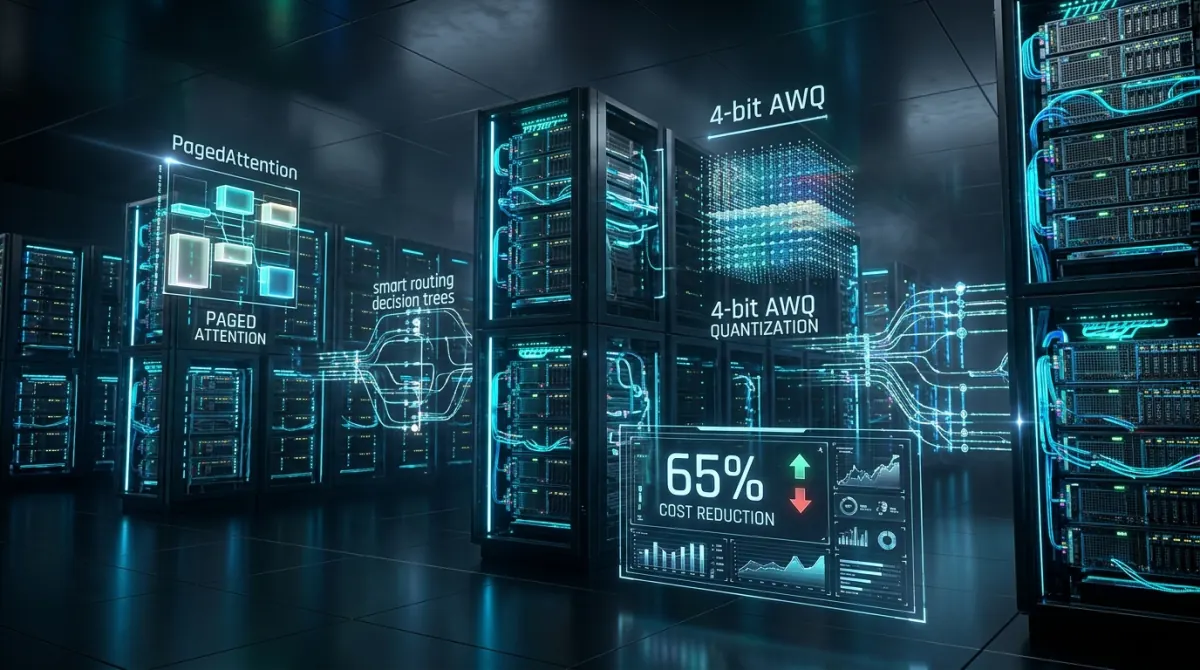

Cutting LLM Inference Costs by 65% with vLLM, AWQ & Smart Routing
An engineering and executive FinOps deep dive into slashing production LLM inference expenses by 65%+: combining vLLM PagedAttention, 4-bit Activation-aware Weight Quantization (AWQ), speculative decoding, and sub-15ms semantic query routing.
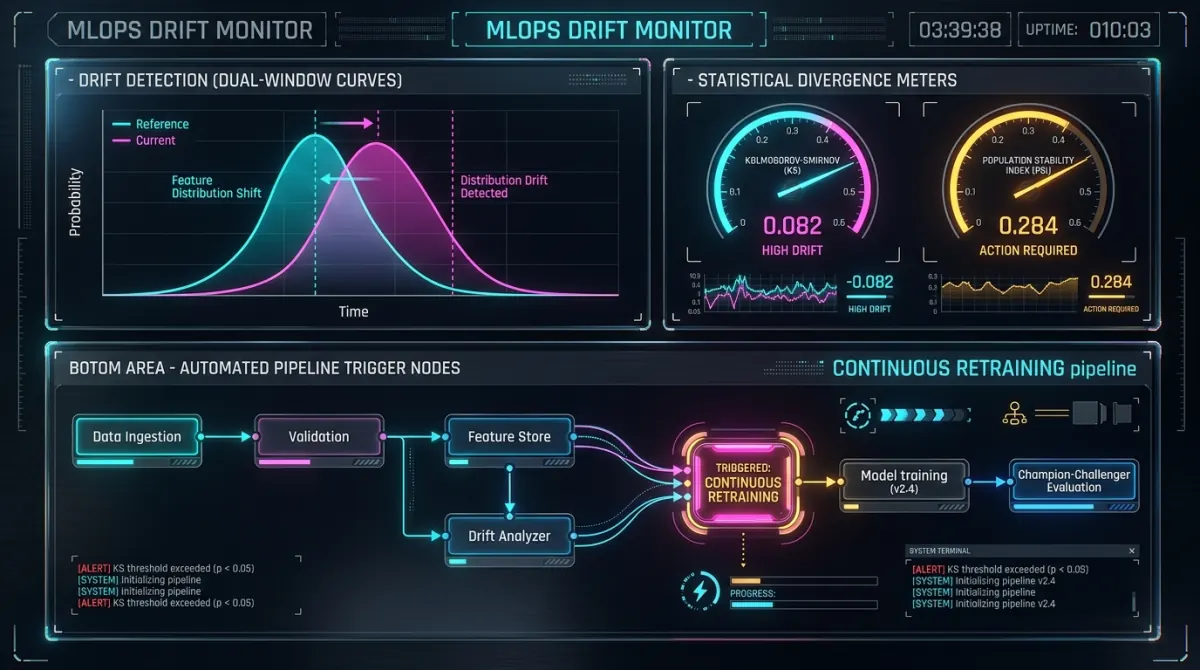

Continuous Retraining Pipelines: Detecting & Handling Concept Drift
An engineering and mathematical blueprint for building automated model monitoring and continuous retraining pipelines: distinguishing covariate shift from true concept drift using KS-tests, PSI, Wasserstein distance, and zero-downtime shadow deployments.


Sub-50ms Fraud Detection Models in Production
Inside FalconicLab's Sub-50ms Financial Fraud Detection Model (exp-02): achieving 99.6% precision at sub-15ms inference latency across 120 graph features under strict PCI DSS v4.0 payment authorization SLAs.


Measuring What Matters: Precision, Latency & Cost-per-Run Metrics
An executive and engineering guide to discarding AI vanity metrics: why accuracy lies, how compounding tail latencies cripple multi-agent systems, and how to measure true Cost-per-Verified-Outcome (CPVO) using OpenTelemetry GenAI standards.


MLOps for Autonomous Systems: From Experiment to Reliable Deployment
The complete engineering blueprint for operationalizing autonomous AI agents: shifting from traditional predictive MLOps to agentic CI/CD, deterministic trajectory regression testing, protocol versioning, and canary release gates.


Designing Production-Grade Autonomous Systems (Not Just Demos)
The definitive engineering blueprint for architecting mission-critical autonomous AI systems: separating the 15ms deterministic control plane from stochastic data planes, enforcing state invariants, and containing blast radiuses across 47 intelligence nodes.


Tool Use & Function Calling Patterns That Scale
How to engineer high-throughput tool use and function calling across 50+ enterprise APIs: eliminating prompt bloat with dynamic tool retrieval, enforcing grammar-constrained decoding, and securing execution with idempotent out-of-process proxies.


Failure Logs & Observability in Multi-Agent Architectures
Why traditional APM tools fail on multi-agent architectures, how to trace stochastic causality across multi-hop state graphs with OpenTelemetry GenAI semantic conventions, and real production failure telemetry from FalconicLab.
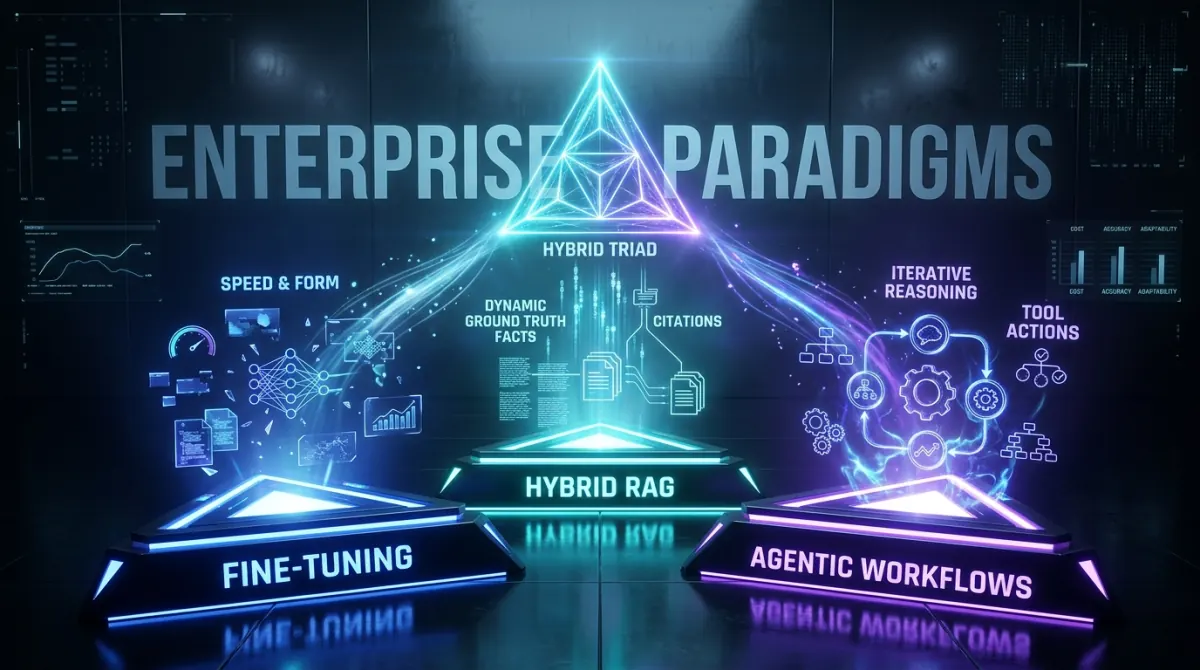

Choosing Between Fine-Tuning, RAG, and Agentic Workflows
A definitive executive and engineering decision framework for choosing between Fine-Tuning, Retrieval-Augmented Generation (RAG), and Agentic Workflows: comparing latency, unit economics, data volatility, and governance constraints.
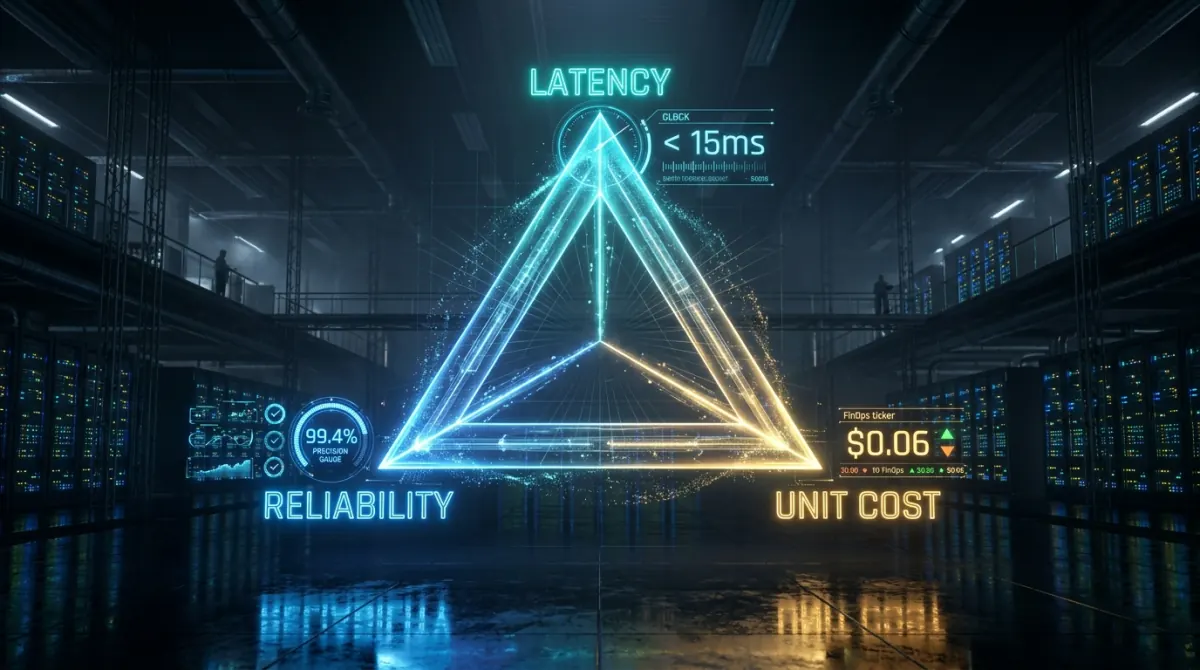

Enterprise AI Architecture: Latency, Reliability & Cost Trade-offs
How to engineer enterprise AI systems that balance the Iron Triangle of Latency, Reliability, and Cost: analyzing P99 tail latency budgets, compound failure probabilities, and FinOps unit economics across 47 intelligence nodes.


How We Evaluate AI Systems: Benchmarks Over Promises
A comprehensive executive and engineering guide to discarding synthetic benchmark vanity: how FalconicLab tests autonomous AI systems against deterministic invariants, compound multi-hop entropy, and real production workloads across 47 intelligence nodes.


From Prototype to Production: The Real Cost of Autonomous Agents
A comprehensive executive and financial analysis of the true Total Cost of Ownership (TCO) of enterprise autonomous AI agents: deconstructing hidden token inflation, retry storms, human triage labor, and self-hosted GPU infrastructure.

AI Agents vs. Traditional Automation: When to Use What
A definitive architectural decision framework for enterprise leaders: determining when stochastic autonomous AI agents are required versus when deterministic code, DAG pipelines, and traditional RPA deliver superior reliability and ROI.


Transparency in AI Engineering: Why We Publish Failure Logs
Why the enterprise AI industry is suffocating under marketing theater, why FalconicLab publishes raw failure logs and telemetry for every system we ship, and how blameless causal post-mortems build mission-critical autonomous intelligence.


Building AI Systems Enterprises Can Actually Trust & Maintain
The definitive executive and engineering blueprint for Day-2 operations in enterprise AI: building maintainable, auditable, and trustworthy autonomous systems compliant with NIST AI RMF, ISO 42001, and SOC 2 across multi-year operational horizons.
AI Agent Development Cost: What Drives the Price and How to Budget
What determines the cost of building an AI agent: scope, integrations, data readiness, evaluation, security, and ongoing operation, plus how to scope a pilot and avoid budget surprises.
LLM Fine-Tuning vs RAG vs Prompt Engineering: How to Choose the Right Approach
A decision framework for choosing between prompt engineering, retrieval-augmented generation, and fine-tuning, including what each solves, what each costs, and when to combine them.
How to Implement RAG: A Step-by-Step Guide from Prototype to Production
A practical guide to implementing retrieval-augmented generation: data preparation, chunking, embeddings, retrieval, evaluation, and the operational work that separates a demo from a production system.
AI Security Audit Checklist: 20 Controls to Verify Before Shipping an LLM Application
A practical, control-by-control checklist for auditing LLM applications and AI agents: prompt injection, data leakage, tool permissions, retrieval security, logging, and incident response.
Multi-Agent Orchestration Protocols in Production: Lessons from 10M Invocations
An architectural deep dive into inter-agent consensus mechanisms, memory retention layers, and state machine recovery when operating multi-agent systems at enterprise scale.
RAG at Petabyte Scale: Hybrid Dense-Sparse Vector Retrieval Systems
Combining BM25 lexical search with OpenAI text-embedding-3 vectors to eliminate hallucination in high-compliance financial and legal knowledge bases.
Zero Trust Cybersecurity for Autonomous AI Models & LLM Endpoints
Protecting corporate AI agents from prompt injection, memory poisoning, data exfiltration, and adversarial guardrail bypasses.
Production MLOps: Automated Concept Drift Detection and Retraining Loops
How to detect model decay in live production streams using Kolmogorov-Smirnov statistical tests and containerized Kubeflow pipelines.
Optimizing LLM Inference Costs: Reducing Compute Spend by 65% with vLLM & AWQ
How to deploy custom open-weights models on private GPU clusters, cutting API costs while improving throughput by 4x.
Fine-Tuning Reasoning Models for Domain-Specific Enterprise Contracts
A practical guide to Supervised Fine-Tuning (SFT) and Direct Preference Optimization (DPO) on reasoning LLMs for specialized legal and financial compliance.